When you make a promise at thirty, you believe you’ll keep it because thirty feels close to forever. You trust that time will stay gentle, that faces won’t change much, and that friendships formed in youth will survive simply because they once felt unbreakable.
But thirty years has a quiet way of passing.
It doesn’t arrive all at once. It slips by unnoticed, taking pieces with it, until one day you realize how much has changed without ever asking your permission.
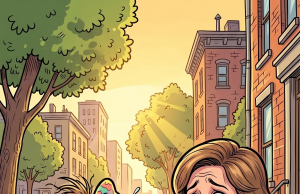
I stood outside May’s Diner on Christmas morning, watching snow slide off the roof and melt into the pavement.
I hope they show up, I kept thinking.
The diner looked exactly the same. Red vinyl booths, the crooked bell above the door, the familiar smell of coffee and grease—it was the place where we’d sworn we would meet again.
Ted was already inside, sitting in the corner booth with his coat beside him and his hands wrapped around a mug. His hair had gone silver at the temples, lines carved deeper around his eyes, but his smile pulled me straight back to who we used to be.
“You made it,” he said, standing up to hug me.
“It would’ve taken something serious to keep me away,” I replied. “You didn’t really think I’d break the only pact I ever made.”
He laughed, though there was doubt behind it. “You never answered my last email.”
“I figured showing up was answer enough.”
We ordered coffee without looking at the menu. The seat across from us stayed empty, drawing my eyes again and again.
“Do you think he’ll come?” I asked.
“He better,” Ted said. “It was his idea.”
Thirty years earlier, just after midnight on Christmas Eve, we’d stood in a gas station parking lot, half-drunk, shivering in the cold. Rick had suggested it suddenly: thirty years later, same town, same date, same diner. No excuses. We laughed, shook hands, and believed it would be that simple.
Back in the present, Ted tapped his mug. “Rick meant it more than we did,” he said quietly.
At twenty-four minutes past noon, the bell rang.
I looked up, expecting Rick’s familiar slouch and late-apology smile. Instead, a woman walked in. She was about our age, dressed in a dark blue coat, clutching a leather bag. When her eyes met ours, her expression shifted—not relief, not recognition, but something heavier.
She approached slowly.
“My name is Jennifer,” she said. “I was Rick’s therapist.”
She sat down carefully and told us the truth. Rick had died three weeks earlier, suddenly, of a heart attack in Portugal.
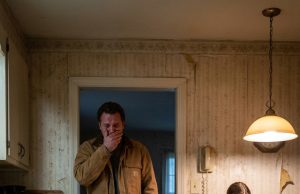
Ted leaned back as if punched. I couldn’t speak.
Jennifer explained that Rick had told her about the pact—the diner, the time, the date. He asked her to come if he couldn’t.

They had stayed close long after therapy ended. She became the person he trusted most. He spoke of us often, with warmth and sadness, never bitterness. He said we were the best part of his youth, even when he felt like he stood just outside the circle.
She showed us a photo of the three of us at fifteen. Ted and I stood close together. Rick stood just a step away.
“He kept this on his desk,” she said.
She reminded us of moments we barely remembered—the day at the lake, the dance he never attended, the postcards he wrote but never sent. Rick had been afraid to speak, afraid that saying something would confirm what he already believed: that he mattered less.
Before leaving, Jennifer placed a sealed letter on the table. Rick had written it for us.
In it, he said he didn’t break the pact—he just needed help keeping it. He thanked us for loving him the way we knew how. He called us the brothers he always wanted.
That evening, we sat on the steps of Rick’s childhood home, listening to his voice on an old cassette. He told us not to turn this into regret, but into memory.
Ted laughed softly through tears. “He was always late.”
“Yes,” I said. “But he still came.”
Sometimes reunions don’t happen the way you imagine.
Sometimes they happen when you finally learn how to listen.