The Unscheduled Lesson
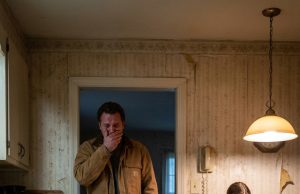
The auditorium was filled with the low hum of anticipation, but the applause hadn’t even begun when Silas Thorne froze at the threshold of the primary wing. He had been invited back to his daughter’s school to deliver a keynote on entrepreneurial vision—a subject he could usually discuss with effortless charisma. As the chief executive of a sprawling logistics firm, Silas was accustomed to the weight of expectant eyes and the sharp air of high-stakes boardrooms, yet none of his professional accolades could have prepared him for the sight that greeted him through the open door of the fifth-grade classroom.
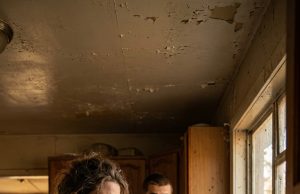
His eldest daughter, Maya, was sitting on a corner of the vibrant area rug, her slender arms wrapped with a desperate, protective strength around a small bundle.
A baby.
His infant son, barely two months old.
And Maya was weeping, her shoulders shaking in a rhythmic, silent cadence that seemed to vibrate through the entire room.
“Maya?” Silas’s voice emerged as a fragile thread, far softer and more uncertain than the commanding tone he used to direct hundreds of employees.
The bustling classroom fell into an unnatural, pressurized silence. A teacher’s assistant stopped mid-motion while tidying a nearby desk, and a group of children stood as motionless as statues, their gazes darting between their classmate and the man in the expensive suit. At the rear of the room, the principal adjusted his tie, his expression a complicated mask of confusion and concern.
Maya lifted her head, her face a map of salt-streaked distress and raw exhaustion.
“Dad…” she gasped.
She pulled the infant closer to her chest, her knuckles turning a ghostly white as if she expected someone to snatch the baby away from her. Silas moved with a sudden, uncoordinated urgency, dropping to his knees on the carpeted floor beside her.
“What is happening, sweetheart? Why on earth do you have the baby here at school?” he asked, his heart beginning a frantic, uneven drumming against his ribs.
Maya hesitated, her lower lip trembling with the weight of a secret she wasn’t designed to carry, before she leaned her forehead against his shoulder and whispered into his ear.
“Mom told me I had to take him, Dad. She said it was my turn today.”
Something fundamental shifted in the architecture of Silas’s world. It wasn’t a sudden explosion of panic, but rather a cold, creeping realization that seeped into his bones. This was the physical manifestation of a structural failure he had been too distracted to notice. Silas had departed their home before the first grey light of dawn had even touched the horizon, leaving his wife, Julianne, standing in the kitchen in her bathrobe. She had insisted that she was fine, promising that she would manage the morning chaos of school lunches and diaper changes with her usual, practiced efficiency.
“Don’t give it a second thought, Silas,” she had said with a wan, flickering smile that didn’t quite reach her eyes. “I’ve got everything under control.”
And because it was easier for his schedule, Silas had chosen to believe her.
The Weight of a Living Shadow
Silas looked up at the teacher, his face flushing with a deep, burning shame that made the wool of his suit feel suffocating.
“I am incredibly sorry,” he managed to say, his voice thick with an emotion he couldn’t quite categorize. “I had no idea… I didn’t know.”
“It’s alright, Mr. Thorne,” the teacher replied, her voice soft with a pity that cut deeper than an insult. “We were all quite stunned. Maya arrived with the stroller and simply took her seat. She told us her mother had instructed her to bring him along because she couldn’t keep her eyes open anymore.”
Silas nodded slowly, the gravity of the situation settling over him like a heavy shroud. “May I take them? I need to get them home.”
“Of course. Please.”
This time, Silas took the infant into his own arms, surprised by the fragile lightness of the boy and the overwhelming scent of baby powder and milk. Maya walked at his hip, her small hand gripping his blazer so tightly that her fingers began to cramp, as if she feared he might evaporate into the morning mist if she let go for even a second.
Once they were settled into the quiet sanctuary of the car, Silas adjusted the mirror so he could catch the reflection of Maya’s eyes.
“Maya, honey, I need you to tell me exactly what happened after I left the house this morning,” he said, his voice steady but hollow.
She remained focused on her lap, her fingers tracing the hem of her denim skirt. “Mom wouldn’t wake up properly, Dad. I went into the living room and she was just lying on the sofa with all her clothes still on from yesterday.”
Silas felt his grip tighten on the leather steering wheel until the stitching groaned. “And when you tried to talk to her?”
“She just groaned and told me she couldn’t do it anymore,” Maya continued, her voice cracking like thin ice. “The baby was screaming because he was hungry, so I made the bottle the way you showed me that one time. I didn’t want to leave him there alone with her like that. She looked… she looked like she was drifting away.”
Maya let out a jagged, hitching breath that sounded far too old for a child of ten. “So I put him in the stroller and I just started walking. I thought if I brought him to school, someone would help me.”
Silas didn’t reply immediately, not because he lacked the words, but because he didn’t trust the stability of his own lungs. He drove through the familiar suburban streets, seeing them for the first time as the backdrop of a tragedy he had been too busy to prevent.
The Silence of the Hearth
When they pulled into the driveway, the house stood as a silent, imposing monument to a life that had been running on empty. Silas hurried through the front door, leaving Maya in the entryway with the baby, his footsteps echoing on the hardwood.
“Julianne?” he called out, his voice bouncing off the high ceilings of the foyer.
There was no answer, only the low, monotonous hum of the refrigerator. He found her exactly where Maya had described, draped across the sofa in a nest of tangled blankets, her skin possessing a translucent, sickly pallor.
“Julianne, wake up,” Silas said, dropping to his knees and gently shaking her shoulder. “Julianne, please, talk to me.”
She stirred with a heavy, labored groan, her eyes fluttering open but failing to find focus for several agonizing seconds. “Silas… is it time for work already?”
The relief that flooded through him was instantaneous, yet it was shadowed by a dark, roiling wave of terror. “You didn’t take Maya to school today, Julianne. She had to navigate the streets by herself. She took the baby with her.”
Julianne’s eyes snapped wide, the pupils dilating as the fog of her exhaustion was pierced by a sharp, jagged spike of horror. “What?”
“She carried him into her fifth-grade classroom,” Silas whispered, his voice trembling. “She sat there in social studies holding an infant because she didn’t think he was safe here.”
Julianne sat up abruptly, her hands flying to her face as she began to sob—a raw, guttural sound that tore through the quiet of the house. “I… I didn’t mean to. I just thought if I could close my eyes for five minutes, the world would stop spinning. I was so tired, Silas. I’ve been so tired for months.”
It was then, in the stark, unyielding light of the living room, that Silas finally truly looked at his wife. He saw the profound depth of the hollows beneath her eyes and the way her hands shook with a fine, persistent tremor. He realized that the exhaustion wasn’t a temporary state of being; it was a chronic, soul-crushing weight she had been supporting while he was out building an empire.
The Cancellation of the Future
That afternoon, Silas didn’t return to the office. He didn’t check his emails, and he didn’t call his assistants to reschedule the morning’s missed opportunities. He simply took his phone and powered it down, placing it on the high shelf of the pantry where it couldn’t reach him.
He sat at the oak kitchen table with Julianne while Maya sat nearby on the rug, gently rocking her brother’s cradle. Silas watched his daughter, realizing with a sharp pang of guilt that she had spent the last two months transitioning from a child into a surrogate caretaker, her own needs sacrificed to fill the gaps he had left behind.
“Julianne,” he said, reaching across the table to take her cold hands in his. “I need you to tell me everything. No more ‘I’ve got it.’ No more flickering smiles.”
Slowly, the narrative of her hidden struggle began to unfold. It started shortly after the baby was born—a crushing, atmospheric sadness that made the simplest tasks feel like heaving stones uphill. It was a constant, vibrating anxiety that she was failing at every turn, coupled with a paralyzing fear that if she admitted her struggle, she would be seen as a burden Silas didn’t have the time to carry.
“I watched you growing the company, Silas,” Julianne admitted, her voice a ragged whisper. “You were so excited, so full of energy, and I didn’t want to be the thing that grounded you. I thought if I just tried harder, if I just pushed through one more day, the light would come back.”
Silas felt a devastating ache in the center of his chest. “You are the center of my life, Julianne. The company is just a collection of spreadsheets and contracts. You are my family, and I have been treating you like a background process.”
Tears tracked through the dust and fatigue on her cheeks. “I just thought I was supposed to be able to handle it alone.”
Silas squeezed her hands, his voice gaining a new, grounded authority. “Nobody is supposed to handle the world alone. I’m staying home. We’re going to fix the foundation before we worry about the roof.”
The Reconstruction of a Life
That evening, Silas performed a series of tasks that felt more significant than any multi-million dollar acquisition. He bathed the baby, his hands trembling as he navigated the soap and the tiny limbs. He sat with Maya and helped her work through a difficult set of long-division problems, listening as she talked about her day with a cautious, growing brightness. He made a dinner that was technically overcooked and poorly seasoned, yet they ate it together in a house that finally felt as though the air was circulating again.
Later, after the children had finally surrendered to sleep, Silas sat with Julianne on the back porch, watching the fireflies dance in the tall grass.
“I am so incredibly sorry,” he said, the words heavy with the weight of his own late realization.
Julianne looked at him, her silhouette softened by the moonlight. “For what, specifically?”
“For allowing my ambition to blind me to the reality of our own hallway,” Silas replied. “I was so focused on being a leader for the world that I forgot how to be a partner for you.”
Julianne leaned her head against his shoulder, her breathing rhythmic and calm for the first time in weeks. “We’ll find our way back,” she whispered.
“Yes,” Silas promised. “We will.”
The ensuing months were a season of intentional, quiet reconstruction. Silas restructured his entire professional life, delegating the non-essential and setting a hard boundary at five o’clock that no executive emergency was permitted to cross. He hired a specialized postpartum doula to support Julianne, ensuring she had the space and the medical care required to navigate the chemical and emotional maze of her recovery.
Slowly, the color returned to Julianne’s cheeks, and the haunted, hollowed-out expression in Maya’s eyes began to fade, replaced by the effortless, uncomplicated joy of a ten-year-old who no longer had to worry if the baby would be fed.
The Return to the Classroom
Several weeks later, Silas returned to the elementary school. He wasn’t there to give a speech about leadership or to talk about the mechanics of success. He arrived in a pair of casual chinos and a sweater, carrying a small bag of supplies for the upcoming class art project.
He sat in one of the tiny plastic chairs at the back of the room, watching as Maya worked on a watercolor painting of a mountain range. When she noticed him, her entire face illuminated with a brilliant, genuine smile that caught the afternoon sun.
“Daddy!” she exclaimed, dropping her brush and running across the room.
He stood and caught her in a hug, lifting her off the floor. “Hey there, artist. No extra passengers today?” he teased gently.
She let out a bright, melodic giggle that made Silas’s heart feel as though it were finally expanding to its proper size. “Nope. Just me today, Dad. Mom is at her yoga class.”
Silas crouched down to her eye level, his expression serious and full of a profound, unhurried pride. “I want you to know something, Maya. I am so incredibly proud of you. Not just for being brave that morning, but for being the person who showed me where the path was when I got lost.”
Maya thought for a moment, her eyes reflecting a wisdom that she had earned in the shadows but would now carry into the light. “I was just making sure we all stayed together, Dad.”
Silas offered a solemn nod. “And you did a beautiful job.”
On the drive home, the car was filled with the sound of Maya humming a song she had learned in music class, and the atmosphere was devoid of the heavy, pressurized silence that had once defined their mornings. That night, as Silas tucked her into bed and pulled the comforter up to her chin, she looked up at him with a quiet, satisfied clarity.
“Everything is okay now, right, Dad? We’re all really here?”
Silas smiled, brushing a stray lock of hair from her forehead. “We are all really here, Maya. And we’re staying.”
As he turned off the lamp and stood in the doorway, Silas looked back at his daughter—a child who was finally, safely, just a child again. He realized then that true success wasn’t measured in the volume of applause or the growth of a profit margin. It was found in the quiet, unremarkable moments of showing up, in the ability to see the flickering signs of distress before they became a conflagration, and in the courage to dismantle a life of achievement to build a home of substance.
He had spent years chasing a horizon that always moved, but standing there in the dim light of the hallway, Silas Thorne realized that he had finally arrived exactly where he was meant to be. And this time, he was never going to look away again.