The Architecture of an Omission
“Mommy… am I permitted to have a little more, or is that the conclusion of the meal?”
The request was delivered in a register so delicate it was nearly entirely swallowed by the low, metronomic hum of the stainless-steel refrigerator.
The child was seven years old, seated at the far end of an expansive, polished walnut dining table within an immaculate residence in the quiet suburbs of Lake Forest, Illinois. It was the sort of home that possessed a highly curated domestic scent—an unyielding combination of premium citrus wood polish, expensive botanical candles, and the rich, golden aroma of a rosemary-crusted roast emerging from the double ovens. Yet, despite the material abundance radiating from the crown molding down to the hand-woven rug, the child’s porcelain plate held nothing more than a solitary slice of unbuttered sandwich bread, positioned adjacent to a single glass of tap water.
Directly across the expanse of the walnut grain sat her stepsister, Beatrice—an eight-year-old with vibrant, rosy cheeks and hair woven into a sequence of complex, flawless braids. Beatrice was currently using her heavy silver cutlery to slice into a thick, tender portion of beef tenderloin, her plate mounded with a generous serving of potatoes whipped with unpasteurized butter. She participated in the ritual of the meal with a slow, unhurried serenity, moving through her food calmly, completely devoid of the necessity to secure permission before her fork reached her lips.
There were no elevated voices reverberating through the dining room. There was no dramatic slamming of oak doors. There was no evidence of primitive, recognizable cruelty.
Nevertheless, an absolute, systemic injustice occupied that dining room like a silent, invisible fourth participant at the table. Because when a developing child is systematically conditioned to ask whether she has the legal right to consume nutrients, the primary pathology of the household isn’t a scarcity of provisions.
It is the execution of absolute control.
At the head of the table sat Julianne Vance, Beatrice’s mother—a woman of exceptional elegance, possessed of a composed, professional carriage and a flawlessly managed smile. Seated to her right, having been invited under the pretense of a casual evening dedicated to organizing corporate estate documents, was Thomas Miller, a prominent fiduciary attorney and a long-time professional associate of Julianne’s. He had arrived at the residence fully expecting a routine review of standard inheritance frameworks, a legal procedure completely lacking in dramatic complications.
But from the initial sequence of the dinner service, a sudden, localized tightness had begun to form behind his ribs.
The little girl with the dry bread—Evelyn Vance—did not utilize the support of her chair’s high backrest. Instead, her spine was tilted slightly forward, her posture rigid, as if the musculature of her torso had entirely forgotten the mechanics of relaxation. Her dark eyes appeared disproportionately large for the narrow contours of her pale face, and her small fingers were occupied with tearing the slice of bread into tiny, geometric fragments. It was not the playful distraction of a child playing with her food; it was a deliberate, hyper-focused operation, performed as though she had been strictly trained to extend the lifespan of every single crumb.
Beatrice reached for the serving bowl, her voice bright. “May I please have another helping of the potatoes, Mom?”
“Of course, sweetheart,” Julianne replied, her tone instantly warming into a maternal melody as she used the silver spoon to transfer another substantial portion onto her daughter’s plate. “Ensure you finish every bite so you have enough energy for your ballet workshop tomorrow.”
Evelyn swallowed, her throat moving with a dry friction. The rich, savory steam from the center of the table drifted toward her position like a quiet, forbidden temptation, yet she didn’t voice a request for the meat. She simply lifted a microscopic fragment of her torn bread to her mouth, followed it with a shallow sip from her water glass, and then, completely independent of her own volition, murmured a single observation.
“The dinner smells remarkably beautiful tonight.”
There was no accusation woven into the syllables. There was no trace of childhood manipulation.
There was only hunger.
Julianne didn’t redirect her gaze to the far end of the walnut table; her flawless smile remained entirely locked onto Beatrice’s profile. “Beatrice requires an exacting balance of proteins and complex nutrients to support her developmental milestones,” she said to Thomas, her tone conversational and light.
Only after the sentence had been fully delivered did she turn her eyes toward Evelyn, her expression shifting into the mild, polite disapproval one might display when noticing a minor cosmetic blemish on a piece of upholstery.
“Heavy, rich proteins have always caused an immediate disruption to your digestive tract, Evelyn. A simple, unadorned baseline is far safer for your system.”
Beatrice continued her dinner, completely unbothered by the restriction. To her, the configuration of the table was a permanent law of nature, a normal domestic standard. Evelyn lowered her eyes to her plate, her fingers resuming their microscopic work on the bread.
A moment later, a distinct, low-frequency rumble emerged from beneath her small palms—a faint but entirely audible contraction of an empty stomach.
She immediately pressed the flat of her hand against her abdomen, applying physical force as if she could manually silence the biology of her own body. Julianne’s eyes flicked toward her for a fraction of a second, her brows drawing together not with a maternal concern, but with a sharp, localized coldness.
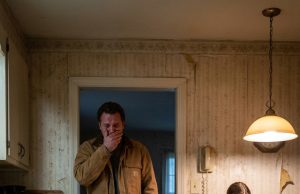
A sudden chill traveled down the length of Thomas’s spine, settling into the small of his back. He offered no verbal objection, his face remaining a mask of professional neutrality as he reached for his water, but his eyes continued to record every detail of the room.
The Mechanics of the Lock
The following afternoon, Thomas returned to the Lake Forest residence, utilizing the well-worn professional excuse of an overlooked document. “I believe I inadvertently left one of the primary trust ledgers in the library alcove last night,” he explained when the front door was opened.
Julianne greeted him with the identical, flawless composure she had displayed during the dinner service, her silk blouse entirely unwrinkled despite the humidity of the afternoon. Beatrice came descending the grand staircase a moment later, her voice a constant, cheerful hum as she chattered about her intermediate piano curriculum and her upcoming school presentation. Evelyn was entirely absent from the common spaces of the house.
“Evelyn is currently resting in her quarters,” Julianne offered before Thomas could formulate an inquiry regarding her location. “She is an exceptionally sensitive child, emotionally and physically. The minor transitions of a school week leave her completely drained.”
Sensitive.
The adjective was standard, designed to sound entirely harmless within the context of a suburban home. But in the quiet interior of Thomas’s mind, the word had ceased to carry any harmless currency.
While Julianne stepped into the kitchen to supervise the preparation of iced tea, Thomas allowed his gaze to methodically catalog the parameters of the adjacent pantry area. That was the precise coordinate where his professional intuition registered a structural anomaly.
Tucked into the shadowed recess of the hardwood cabinetry was a tall pantry locker. It was not secured by a decorative wooden latch or a standard magnet; instead, a small, functional cylinder lock had been professionally bored into the frame.
It was an absolute, physical boundary.
Julianne returned to the room carrying a crystal pitcher, her eyes instantly tracking the destination of his gaze. “Oh, that particular locker is merely where I secure the specialized nutritional supplements and imported organic treats,” she explained, her voice remaining perfectly level. “Otherwise, Beatrice has a tendency to indulge her sweet tooth before her scheduled dinners.”
As if responding to a cue in a script, Beatrice wandered into the space, her ballet flats clicking against the hardwood. “Mom, my practice session is finished and I’m ready for a snack.”
Julianne detached a small silver key from the ring concealed inside her pocket, inserting it into the cylinder with a sharp, metallic click that sounded through the quiet kitchen like a miniature latch dropping. She swung the heavy oak door open to reveal an interior stocked with premium provisions—high-protein bars, organic fruit purées, dark chocolate clusters, raw almonds, and whole-grain crackers.
Evelyn appeared silently in the shadow of the hallway threshold, her presence so quiet she might have been a projection of the light. She didn’t take a step forward into the kitchen; she simply stood perfectly motionless, her large eyes recording the open shelves of the locked cabinet.
Julianne selected an organic almond bar for Beatrice, then closed the heavy door, the cylinder lock engaging with that same definitive, metallic finality. She turned her body slightly, shielding the locked cabinet from view as she gestured toward an open, unpainted shelf near the lower hutch where several boxes of generic soda crackers and a loaf of inexpensive white sandwich bread were exposed.
“This selection is far more compatible with your digestive baseline, Evelyn. Go ahead and take two.”
Evelyn reached out her hand, her movements slow and deliberate as she selected a single cracker from the sleeve. She did not complain. She didn’t look at her stepsister’s snack. She simply masticated the dry cracker with a focused patience, following it with a measured sip of water from a plastic cup. Her physical frame bore the unmistakable signs of a body that required substantial fuel, yet her lips remained completely sealed against any expression of want.
Thomas felt a hot, focused wave of anger surge through his chest, but he kept his features as rigid as the granite counters around him. An emotional reaction in this kitchen would generate nothing but noise, and noise would inspire Julianne to reinforce her defenses.
True intervention required a silent, legal precision.
Three Internal Reports
Before the hour had concluded, Thomas had vacated the property and was sitting in the interior of his sedan at the edge of the avenue, his phone already engaged as he dialed three specific numbers in rapid succession:
-
Sofia Vance, a senior field supervisor within the municipal division of Family Protective Services.
-
Dr. Marissa Chen, a pediatric specialist whose clinical assessments carried absolute weight in the family court system.
-
A trusted colleague within his own legal firm who specialized in the preservation of minor estates and delicate domestic interventions.
He didn’t wish to create a public spectacle or a chaotic scene that would further fracture the child’s stability. He required an ironclad wall of state-sanctioned protection.
Two days later, the silver doorbell of the Lake Forest estate rang at precisely two o’clock in the afternoon. Julianne answered the summons, her appearance as flawless and composed as it had been on the evening of the document review.
“There has evidently been an egregious procedural error or a malicious misunderstanding on the part of your department,” she stated smoothly, her arm blocking the threshold as she took in Sofia Vance’s identification badge.
“That is entirely possible, Mrs. Vance,” Sofia replied, her voice maintaining the serene, unyielding calm of an experienced social investigator. “Let us step inside to ensure that the documentation matches the reality of the household.”
The investigator conducted her interviews with the children in separate rooms, away from the hovering presence of Julianne’s shadow. Beatrice answered the questions with an innocent, unhurried ease, her legs swinging from the edge of the library chair.
“I usually have poached eggs or Belgian waffles before my morning transport arrives,” the girl explained brightly. “And a cold juice blend before I head to the ballet studio.”
“And does Evelyn share that identical menu with you in the mornings?” Sofia inquired gently, her pen poised over her legal pad.
Beatrice’s features clouded with a genuine, childlike confusion. “Oh, no. Mom explains to us that Evelyn’s internal system is far too delicate for those kinds of things. She has her own shelf in the pantry.”
When Sofia sat down across from Evelyn in the small sunroom, she dropped her voice into a lower, softer register, entirely removing the clinical tone of an official interview. “You aren’t in any form of trouble, Evelyn. I am simply here to learn about your days and ensure you feel safe in this house.”
Evelyn’s dark eyes flickered toward the kitchen door, monitoring the lock before she allowed herself to respond. “Sometimes my plate has bread and water on it.”
“During the evening service?” Sofia asked, her face remaining entirely neutral.
“Bread… or the white crackers from the sleeve.”
“Are you still feeling the hunger after the plates are cleared, Evelyn?”
The child hesitated, her fingers executing that same microscopic tearing motion along the hem of her cardigan, before she delivered a sentence that Sofia would later enter into the official state brief—a line that would remain with Thomas Miller for the remainder of his professional career.
“Yes… but I have learned how to wait for the morning.”
She spoke of her own chronic starvation as if it were merely a localized weather pattern—an inevitable, natural element that a person simply had to endure in silence until the atmosphere cleared.
Sofia requested an immediate inspection of the kitchen facilities. She identified the cylinder lock on the walnut cabinetry within five seconds and requested that the keys be produced without delay. “Do you possess an active medical directive or a pediatric diagnostic file supporting this degree of caloric restriction for the minor, Mrs. Vance?” she asked, her eyes locked on Julianne’s profile.
Julianne’s managed smile finally faltered, the corners of her mouth twitching as she reached for her keychain. “There was… an initial consultation with a holistic practitioner several seasons ago. We found that behavioral stability was improved with an unadorned dietary baseline.”
There was no medical documentation. There was no diagnostic file. There was only the calculated starvation of a child under the guise of an invisible sensitivity.
The Ledger of the Survivor
That identical afternoon, Sofia requested an immediate, emergency medical evaluation at the regional clinic. Julianne offered a sharp, desperate resistance to the order. “Evelyn does not transition well to unfamiliar environments. A sudden clinical intervention will cause a profound psychological regression.”
“If the domestic baseline is as healthy as you maintain,” Sofia countered evenly, her hand already signaling the transport vehicle, “this afternoon’s clinical assessment will simply verify your choices.”
Evelyn descended the grand staircase with a slow, cautious deliberation, her small hand checking the stability of the banister with every step. Sofia knelt on the hardwood of the foyer to meet her at eye level. “We are going to take a brief ride to visit a doctor who wants to ensure your body has everything it needs to grow strong, Evelyn. This is an act of care, not a discipline.”
Evelyn looked at the open front door, then back at Sofia’s face, her voice a whispered question that caused the air in the foyer to turn to ice.
“And… will there be food at the destination?”
A heavy, suffocating silence settled over the immaculate hallway, a silence that Julianne could no longer smooth over with a polished phrase.
“Yes, Evelyn,” Sofia stated with an absolute, unyielding finality. “The moment your body signals that it is hungry, you will eat. That is a permanent rule from this day forward.”
The child’s shoulders dropped an inch, the rigid tension that had defined her spine since Thomas first observed her at the dinner table finally surrendering to a minute relaxation.
At the pediatric clinic, Dr. Chen conducted an exhaustive, multi-phase evaluation. The diagnostic ledger was undeniable: mild nutritional deprivation, muscle atrophy consistent with prolonged caloric restriction, and blood panels indicating an advanced state of systemic fatigue. It was not a spectacular, dramatic case of physical trauma, but it was a chronic, calculated erasure of a child’s vitality.
Meanwhile, within the quiet sanctuary of his office, Thomas Miller was conducting a parallel audit of the financial ledgers Julianne had asked him to organize. Hidden beneath the complex layers of estate trusts and corporate shells, he discovered a secondary transaction log that transformed the case from domestic neglect into a federal crime.
Following the passing of Evelyn’s biological father, Arthur Bennett, three years prior, a substantial life insurance settlement and a monthly survivor benefit had been legally issued exclusively in Evelyn’s name. The funds were strictly designated by the state for the maintenance, education, and physical well-being of the minor child.
Julianne had been routing those direct deposits into a private investment account used to fund Beatrice’s private tuition and the ongoing landscaping contracts for the Lake Forest estate. This was not merely an exercise in psychological control; it was a cold, calculated campaign of financial exploitation.
The Vocabulary of Abundance
The family court issued an immediate, emergency order for the temporary removal of the minor from the property. Within forty-eight hours of the ruling, an unexpected figure entered the legal chambers—Margaret Bennett, the biological sister of Evelyn’s late father. She was a woman of quiet, unassuming dignity who had spent the last two years attempting to maintain contact with her niece, only to be met with a wall of polite, suburban excuses from Julianne’s legal representatives.
She entered the hearing room carrying a small white pastry box tied with an unbleached cotton string, her hands shaking with an emotion she had suppressed for years. “I simply want my brother’s daughter to sit at a table where the bread isn’t counted,” she told the judge, her voice fracturing as she looked at the slight child sitting beside the social worker. “I want her to live in a house where she never has to calculate the cost of a glass of water.”
Evelyn studied her aunt’s face with that same watchful, ancient intensity, her voice a tiny thread in the cavernous courtroom. “In your house… am I permitted to ask for a second helping if my stomach makes a noise?”
Margaret’s professional composure dissolved entirely, her shoulders shaking as she stepped across the rail to kneel beside the child’s chair. “Yes, Evelyn. You can have seconds, you can have thirds, and the kitchen door is never going to have a lock on it as long as I live.”
During her initial week within the sunlit kitchen of her aunt’s home in the valley, Evelyn continued to treat her existence as if she were navigating an active minefield. She would stand motionless before the refrigerator, her hands tucked behind her back, refusing to touch a single item without securing explicit, verbal clearance.
“Am I allowed to have the milk with the blue label, Aunt Margaret?” “Is it okay if I take three of the strawberries from the bowl?” “Am I permitted to finish the rice, or is someone else waiting for it?”
Each time, Margaret’s response remained a steady, unyielding frequency—a soft, metronomic incantation designed to wash away the years of restriction. “Yes, Evelyn. Your body belongs to you now, and it doesn’t require a signature from this world to consume nutrients. When you are hungry, the kitchen is yours.”
Within two months of the intervention, the translucent pallor of her skin began to surrender to a healthy, vibrant pinkness. Within four months, she could run through the clover in the backyard without her knees buckling from a sudden onset of vertigo. Within six, her fingers completely abandoned the hyper-focused habit of tearing her bread into geometric fragments.
One evening during the spring thaw, as they sat together at a simple oak table that smelled of nothing but pine and beeswax, Evelyn set her fork down onto her plate with a soft, clean click. Margaret was mid-motion, lifting a bowl of fresh greens to serve her, when the child spoke a single, uncomplicated phrase.
“I’m full.”
There was no auxiliary apology woven into the syllables. There was no nervous glance toward the pantry. There was no whispered inquiry regarding whether her repletion was a disruption to the household.
It was simply a factual report of her own physical reality. “I’m full.”
Beatrice was placed into a structured program of supervised visitation and family therapy. Slowly, away from the toxic influence of her mother’s calculations, she began to decode a lesson that no adult in her life had ever explained: that love is not a finite, restricted asset that must be hoarded behind a cylinder lock to preserve its value.
One rainy afternoon in the sunroom, she watched Evelyn finish a small container of yogurt, her eyes tracking the movement of the spoon with a quiet, thoughtful intensity. “Did you find the flavor of that selection pleasing, Evelyn?” she asked softly.
Evelyn nodded, her expression serene and unthreatened. “It was very beautiful.”
Beatrice swallowed against a sudden tightness in her own throat, her fingers tracing the seam of her jeans. “I… I truly didn’t possess the data, Evelyn. I thought the arrangement at the old table was just the way your system worked.”
Evelyn looked at her stepsister across the small space, her gray eyes clear and entirely free of resentment. “I didn’t know I had the legal right to say I was empty, Beatrice. I thought the silence was my only choice.”
They reached for each other then—awkwardly at first, their movements constrained by the history of the old house, but then with a fierce, authentic solidarity that belonged to the future.
Julianne Vance faced a sequence of severe legal consequences, including the total forfeiture of the Bennett estate funds and an ironclad protective order that removed her from the child’s geography. And Thomas Miller, who had originally walked up the stone paths of the Lake Forest mansion to review a routine collection of trust documents, carried away a truth that would permanently alter the way he practiced the law.
He understood now that the most dangerous form of human cruelty doesn’t always advertise its presence with a raised shout or a shattered window pane in the dark. Sometimes, it dresses in tailored silk, moves through a room that smells of premium citrus polish, and speaks in a low, elegant whisper:
“Am I permitted to have a little more, or is that the conclusion of the meal?”
And if someone has the courage to stop and listen to the underlying frequency of that whisper before the night cuts off the sound, the small thread of distress can eventually transform into a simple, unadorned declaration of life.
“I’m hungry.”
And the single, unbreakable answer that follows it into the light:
“Eat, my love. You are entirely safe in this house.”